In May, Nairobi hosted the inaugural STRI4Society Week—bringing researchers, innovators, students, industry and policymakers together around a deceptively simple idea: connecting science with society.
The programme included emerging technologies, youth STEM activities, climate solutions, start-up pitches, research commercialisation and discussions about moving ideas from laboratories into real-world use.
There is something important hidden in those words: for society.
Innovation easily becomes mesmerised by itself.
We celebrate the prototype, the patent, the algorithm, the award and the investment round.
But perhaps the better question is:
Whose life became better?
A brilliant agricultural technology that never reaches a smallholder farmer remains an interesting invention.
A medical innovation inaccessible to the patient who needs it most remains unrealised potential.
A digital education platform that cannot reach a child without connectivity reminds us that invention and impact are not synonymous.
This is where the African value of service becomes important.
Service asks innovators to look beyond what can be built toward whom it can serve.
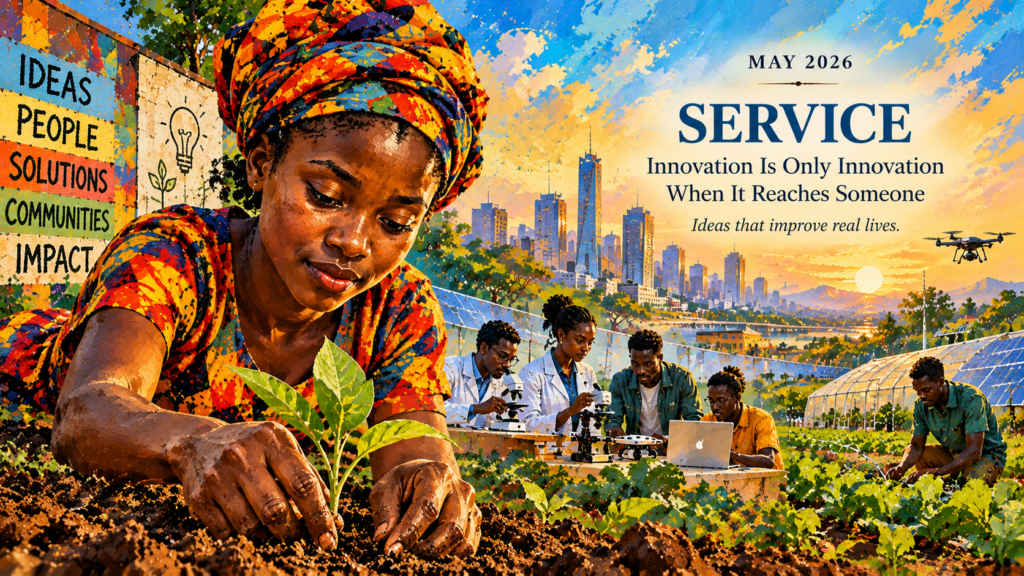
Imagine African innovation measured not only in valuations and downloads but in livelihoods improved, hours saved, illnesses prevented, food produced and opportunities created.
Profit and purpose need not be enemies. Successful enterprise creates employment, investment and prosperity.
But perhaps our Me to We challenge is ensuring that success radiates outward.
Innovation becomes truly transformative when someone’s everyday life changes because of it.
The finest African innovation will not simply impress the world.
It will serve it.