
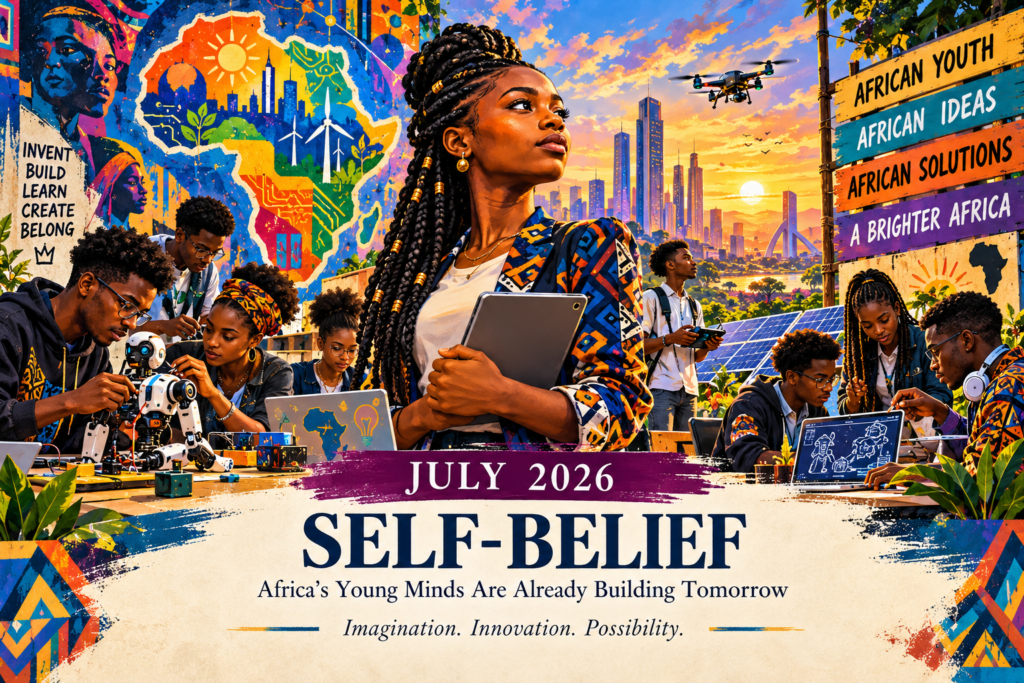
For years, conversations about technology in Africa often began with what the continent lacked.
Infrastructure. Capital. Skills. Connectivity.
Those challenges remain real.
But another Africa is emerging alongside them.
In July, young African innovators were showcased internationally for applying artificial intelligence to real problems across healthcare, agriculture, education, accessibility and public infrastructure. The emphasis was significant: Africa not merely as a passive consumer of AI, but as a creator of solutions shaped by African realities.
That requires technology.
But it also requires something older and perhaps more powerful:
Self-belief.
For too long, Africa has sometimes viewed itself through somebody else’s lens.
We import technologies, management theories, development models—and occasionally even definitions of success—without first asking what knowledge already exists around us.
Self-belief does not mean rejecting ideas because they come from elsewhere.
That would merely replace one limitation with another.
It means approaching the world confidently enough to learn from everybody while still trusting ourselves to create.
Imagine what happens when an African child grows up seeing African scientists, engineers, founders, artists, conservationists and technologists solving meaningful problems.
Possibility becomes visible.
The psychological shift is profound:
Someone like me can build this.
And eventually:
Why not me?
Our young people should encounter Africa not merely as a continent of problems waiting for solutions from elsewhere, but as one of humanity’s great laboratories of possibility.
The future will certainly bring extraordinary technology.
But one of Africa’s most powerful innovations may be much simpler:
A generation that believes in itself.