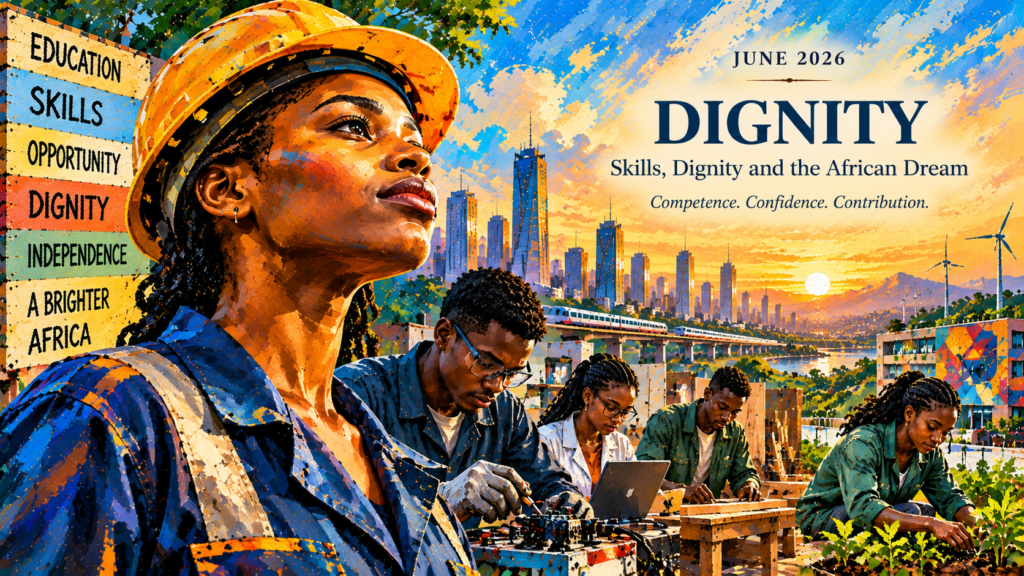
Africa has one of the youngest populations in the world.
That sentence is frequently followed by another: Africa’s youth are its greatest resource.
But potential and opportunity are not the same thing.
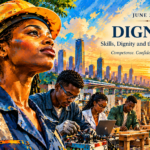
In June, an African dialogue on skills development and workforce preparedness confronted the persistent mismatch between the skills many young Africans possess and those demanded by rapidly changing labour markets. The conversation focused on practical, future-oriented education, TVET reform, stronger industry links and preparation for meaningful work.
Behind the language of labour markets lies something more human:
Dignity.
There is dignity in being able to use your abilities.
There is dignity in earning.
There is dignity in creating something another person values.
And there is dignity in being equipped to solve your own problems rather than remaining permanently dependent upon someone else’s generosity.
Our From Me to We philosophy spoke about going beyond giving someone a fish—or even merely teaching them to fish. Sustainable transformation requires access to training, tools, resources and opportunity.
This is particularly important for Africa’s youth.
We should stop treating vocational education as the poorer cousin of university education. The technician, coder, electrician, engineer, farmer, artisan and entrepreneur all contribute to the ecosystem of a functioning economy.
The question is not whether every young African has a degree.
It is whether every young African has a genuine opportunity to develop competence, confidence and contribution.
Education should not simply produce certificates.
It should expand human possibility.
Because ultimately, meaningful work is about more than income.
It is about dignity.