From global vulnerability to African responsibility
A war erupts thousands of kilometres away. Oil prices rise. Shipping routes are disrupted. Currencies weaken. And somewhere in Africa, a farmer pays more for fertiliser, a commuter pays more for transport, and a family struggles to put food on the table.
Once again, Africa is paying for a crisis it did not create.
The conflicts and economic disruptions of 2026 have exposed a familiar vulnerability. According to the African Development Bank, 43 of Africa’s 54 countries are net importers of crude oil and petroleum products. Even countries rich in natural resources can remain dependent on overseas refining, foreign currencies and international supply chains.
Africa possesses extraordinary natural wealth, yet too often exports raw materials and imports the finished products at a premium.
How did a continent so rich in resources become so vulnerable to decisions made elsewhere?
The explanation is not simply global injustice. Colonial economic structures, unequal trading relationships and international financial pressures have played their part. But so have insufficient investment, weak regional integration, governance failures and our own reluctance to build the productive capacity necessary for economic independence.
We cannot control every war, oil price or global market.
But surely we can do more to control our preparedness.
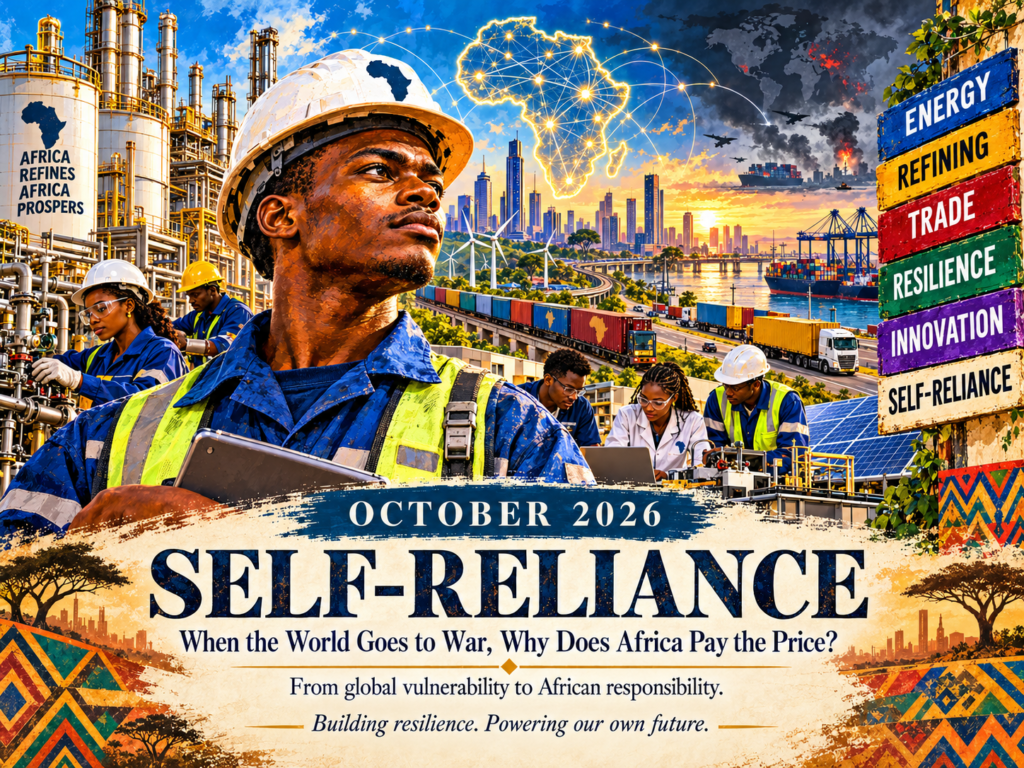
And there are encouraging signs. Nigeria’s expanded refining capacity is reducing its dependence on imported petroleum products. Across Africa, renewable energy investments, regional electricity projects and initiatives such as Mission 300 are expanding access to power.
The IMF’s October outlook also projects 4.5% growth for sub-Saharan Africa in 2026—evidence that the continent is not simply standing still.
Change is happening. But is it happening quickly enough, and is it reaching ordinary Africans?
This is where the African value of self-reliance becomes important.
Self-reliance does not mean isolation from the world. Nor does it mean every African country must produce everything it consumes.
It means building the collective strength to negotiate from a position of capability rather than dependency.
Imagine African countries trading more energy, agricultural produce and manufactured goods with one another. Imagine investing in storage, refining, transport infrastructure, renewable power and skills before the next crisis arrives.
Imagine young African engineers, entrepreneurs and innovators designing solutions that make our economies less vulnerable to distant decisions.
And imagine a leadership culture in which development is measured not merely by promises and announcements, but by the everyday resilience of communities.
Our From Me to We philosophy reminds us that progress is not simply about individual success. It is about creating the conditions in which communities can flourish together.
Perhaps Africa must now extend that philosophy beyond communities to nations.
From competing alone to building together.
The challenge is not to disconnect Africa from the world. It is to ensure that our connection to the world does not continually become our greatest weakness.
For too long, the question has been: What will the world do to Africa next?
Perhaps the more important question is:
What are we prepared to build, together, so that Africa is better equipped to determine its own future?
Our natural resources are valuable. Our young people are invaluable. But our greatest strength may ultimately lie in our collective determination to turn potential into productive independence.
Self-reliance is not rejecting the world. It is finding the strength to engage with it on our own terms.
AfricanValues.World — Rediscovering the values that shape our shared future.